
Commercial
Mold in Warehouses and Industrial Buildings
A guide for warehouse and plant operators on why big building envelopes trap moisture, how it puts inventory at risk, and how large-scale remediation works.
Mold in warehouses and industrial buildings is easy to overlook until it reaches the racks, because these spaces are large, lightly staffed, and often built more for storage than for climate control. A slow roof leak or a stretch of condensation can spread across a big envelope for weeks before anyone notices, and by then it may be threatening product, packaging, and the building itself. For operations and facility leaders, the job is understanding how moisture builds at scale, protecting what is stored, and bringing in contractors equipped to work in high, open spaces.
General guidance, not legal advice
Building codes, environmental rules, and industry standards vary by location and use and change over time. Confirm current requirements with the relevant authorities and your own counsel before acting.
Large building envelopes and how moisture builds
Warehouses and plants enclose huge volumes of air with relatively little conditioning, which changes how moisture behaves. Big metal and masonry envelopes swing with the outdoor temperature, and when the surface temperature drops below the dew point, condensation forms on the underside of the roof deck, on walls, and on cold structural steel. In humid regions or seasons that can happen daily. Add loading dock doors that open to outdoor air, limited ventilation deep in the building, and areas that no one walks through often, and you get pockets where moisture lingers unseen. Mold follows moisture, so these damp zones are where it starts.
Roof leaks and condensation
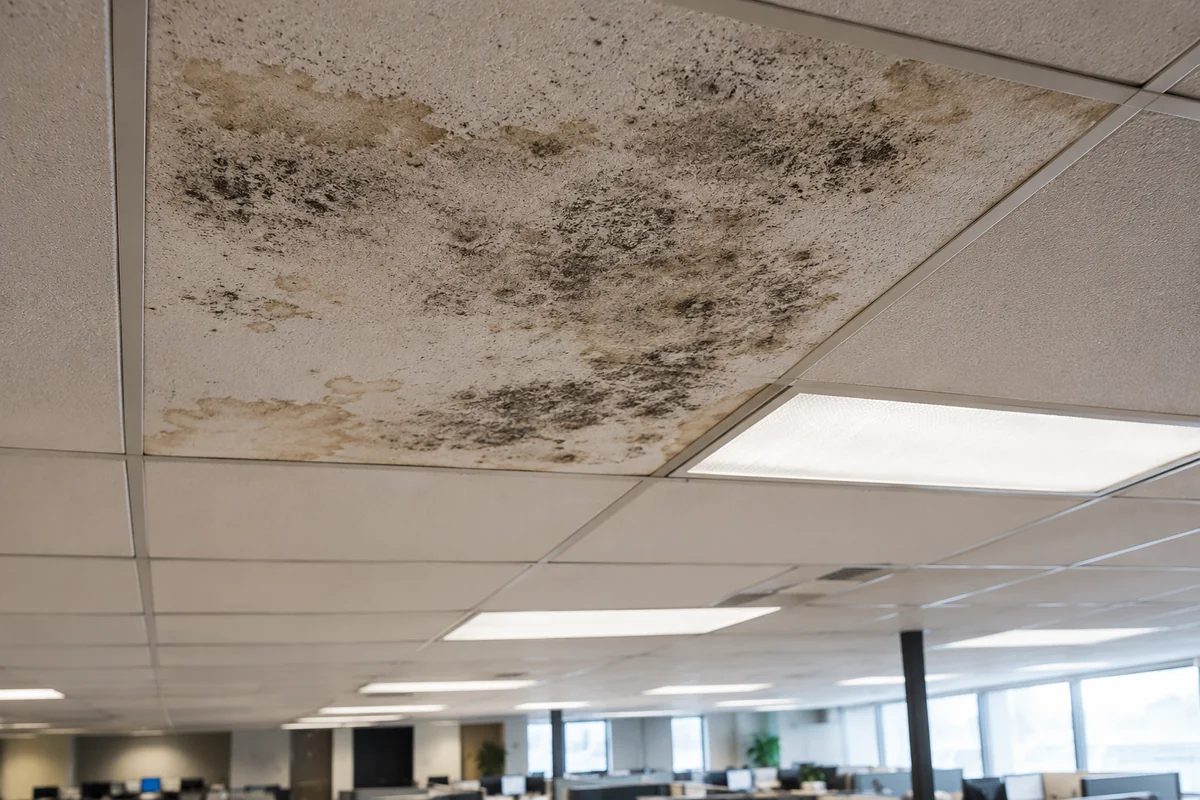
The two biggest moisture sources in these buildings are roof leaks and condensation, and they often work together. Large flat or low slope roofs are prone to ponding and to failures at seams, drains, and penetrations, and a leak over a warehouse can wet insulation and product without ever showing on the floor. Condensation is the quieter problem, forming on cold surfaces during temperature swings and dripping onto whatever sits below. Because the roof plane is so large and so far from eye level, both problems tend to be caught late. Routine roof inspection and attention to insulation and vapor control are the practical defenses.
- Flat and low slope roof leaks at seams, drains, and penetrations
- Condensation on roof decks, walls, and structural steel during temperature swings
- Loading dock doors that let humid outdoor air pour in
- Poor ventilation and dead air deep in the building
- Ground moisture and slab issues wicking up into stored goods
- Plumbing, sprinkler, and process water lines that leak unnoticed
Protecting stored inventory and materials
For most operators the biggest exposure is not the building, it is what is in it. Cardboard, paper, textiles, food and pharmaceutical products, electronics, and raw materials can all be damaged by mold or by the humidity that feeds it, and a claim on ruined inventory often dwarfs the cleanup cost. Storing product off the floor, keeping it away from exterior walls and under roof trouble spots, rotating stock, and monitoring humidity in storage zones all reduce the risk. When a leak or damp area is found, moving nearby product first can prevent a small problem from becoming a large loss.
The challenge of scale and high ceilings
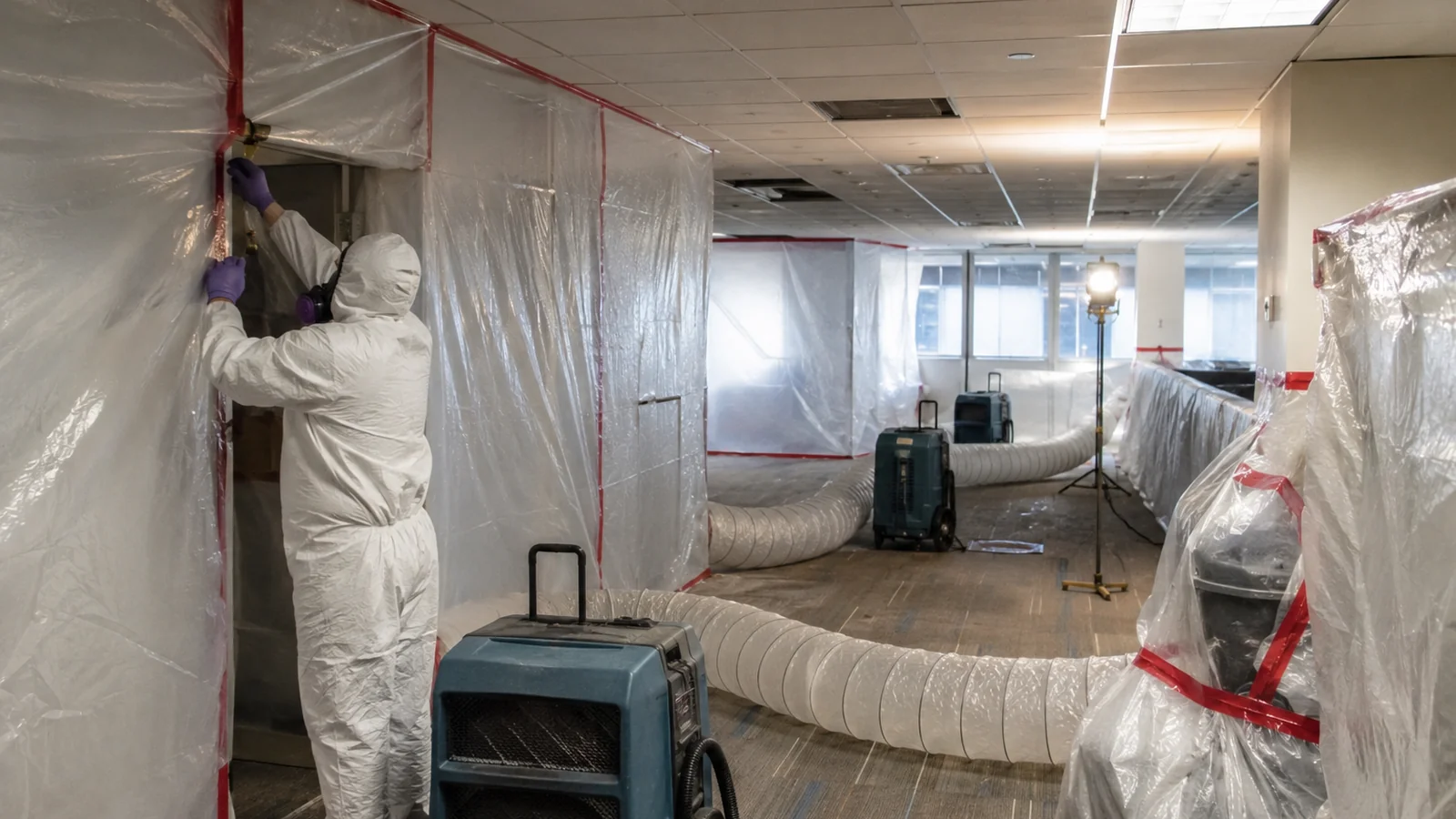
Remediating a warehouse is a different job than remediating an office. Ceilings can run twenty, thirty, or more feet, containment has to cover large areas, and reaching the roof deck or upper walls means lifts, scaffolding, and crews trained to work at height. Air volume alone means more equipment to filter and dry the space. This scale is exactly why large building mold work belongs with contractors who have the equipment and the manpower for it, rather than a crew sized for houses or small suites.
- 1 Find and stop the moisture source, whether a roof leak, condensation, or a pipe
- 2 Move or protect stored inventory near the affected area
- 3 Bring in a licensed remediation contractor to assess the scale of the problem
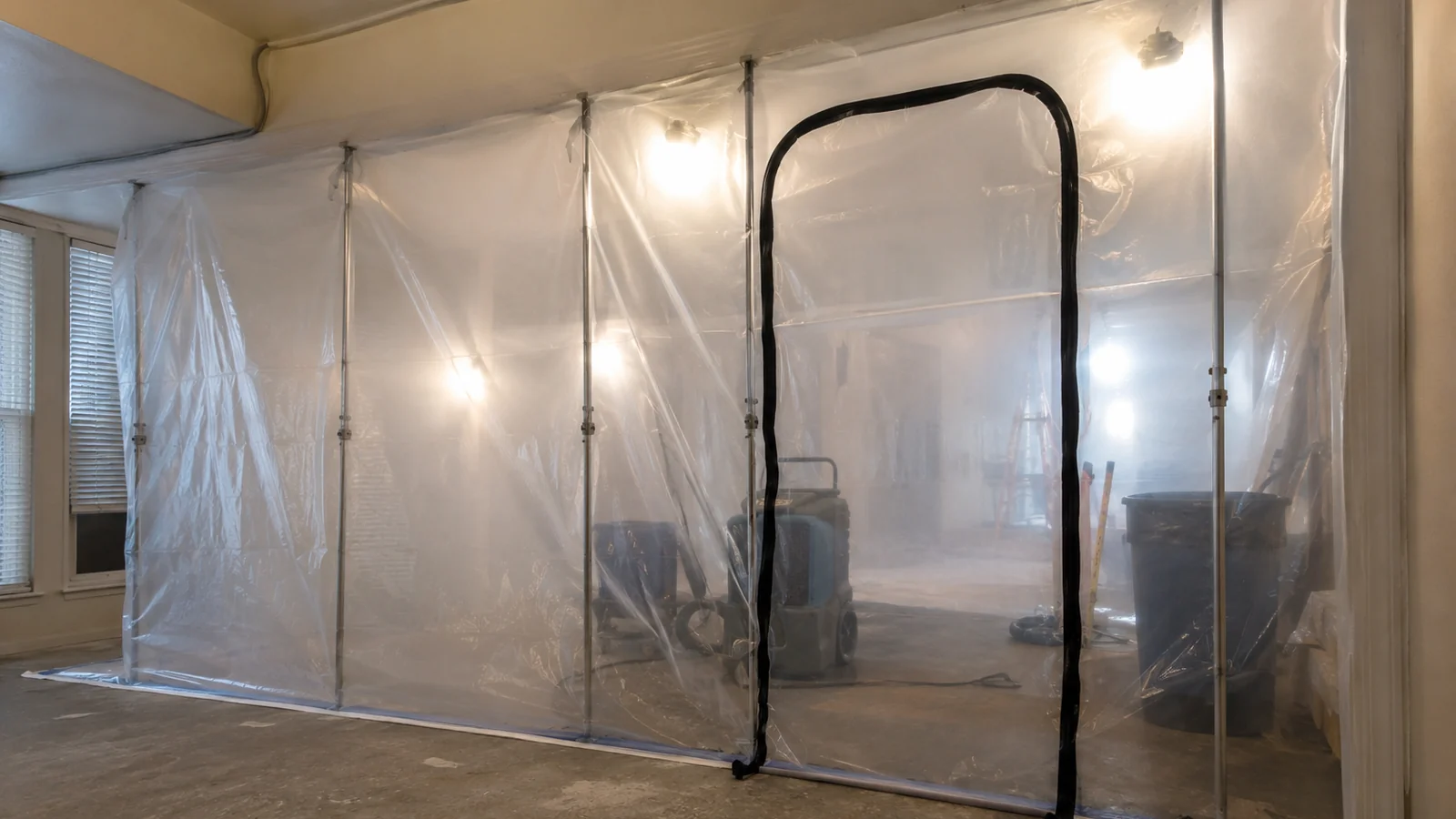
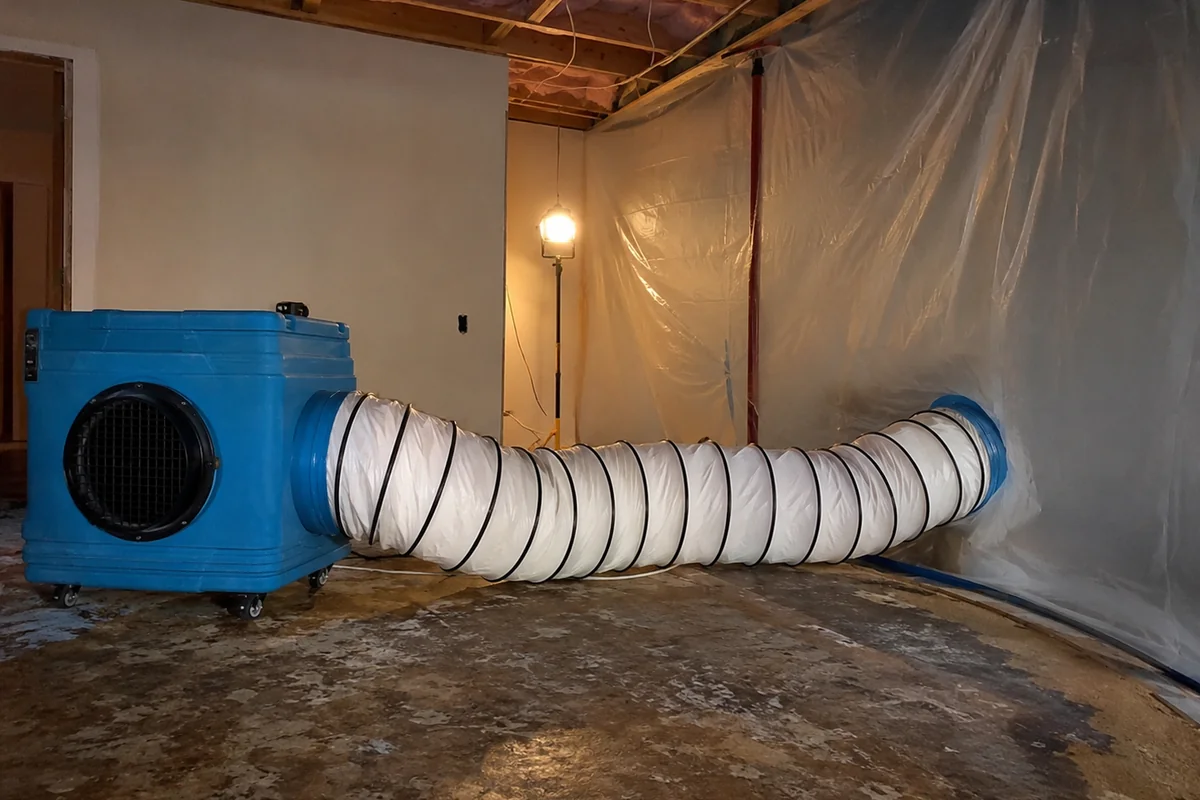
- 4 Contain the affected zone and set up drying and filtration sized for the space
- 5 Remediate at height with the right access equipment and trained crews
- 6 Correct the root cause, from roof repair to added ventilation and dehumidification
HVAC, ventilation, and dehumidification
Long term, controlling humidity across a large volume is what keeps mold from returning. That can mean commercial dehumidification, better air movement to eliminate dead pockets, roof and wall insulation to reduce condensation, and managing how much humid outdoor air comes in through dock doors. In conditioned or partly conditioned space, the HVAC and any process equipment should be sized and maintained with humidity in mind, not just temperature. Getting the moisture balance right across the whole building is usually cheaper than repeated cleanups.
Licensed pros equipped for large spaces
Industrial mold work combines building envelope repair, work at height, and large scale drying, and it should be handled by contractors built for that kind of job. This resource does not perform remediation or hold any licenses. It connects operators to the licensed pros in our network, including IICRC trained remediation contractors equipped for warehouses and plants. When you find a problem, you can find a licensed local pro, review our approach to commercial mold remediation, or get a sense of scope with our commercial mold cost estimator.
Frequently asked questions
Can mold damage stored inventory?+
Yes, and for many operators that is the largest exposure. Cardboard, paper, textiles, food and pharmaceutical products, electronics, and raw materials can all be damaged by mold or by the humidity that supports it. A loss on ruined product often exceeds the cost of the cleanup, which is why protecting and relocating stock near any damp area is a priority.
How is mold handled in large open spaces with high ceilings?+
It takes equipment and crews sized for the job. Reaching a roof deck or upper walls means lifts or scaffolding, containment has to cover large areas, and the sheer air volume requires more filtration and drying capacity. This is why warehouse remediation belongs with contractors who have industrial equipment and trained crews, rather than teams set up for houses or small offices.
How do we prevent mold in a warehouse or plant?+
Manage moisture across the building. Inspect and maintain the roof, control condensation with insulation and vapor barriers, improve ventilation in dead air zones, manage humid air coming through dock doors, and use dehumidification where needed. Store product off the floor and away from trouble spots. Because mold follows moisture, controlling water and humidity is the core of prevention.
What does mold remediation cost for a large industrial building?+
It varies widely with the size of the affected area, the ceiling height and access needed, and the root cause repair, such as a roof. A contained spot is far less than damage spread across a large envelope. Rather than guess, you can get a sense of the range with our [commercial mold cost estimator](/commercial/mold-remediation-cost-estimator/) and then get a firm scope from a licensed contractor.
Commercial mold, in the field


Mold in a building you manage?
Follow a documented response that protects you from the first complaint through clearance testing.
A leak or a stretch of condensation in a big building can quietly threaten both the structure and everything stored under it, so the operators who fare best are the ones who inspect their roofs, control humidity, and act quickly when moisture shows up. When the job calls for scale, our network can connect you to licensed remediation contractors equipped to handle mold in warehouses and industrial buildings.
A tenant reported mold?
Follow a documented response that protects you, step by step.