Tool
Where Mold Hides: A House Cutaway
Every home has the same eight weak spots. Tap each pulsing marker on the cutaway to see why mold favors that spot, the one-line fix, and the full guide for it.
Tap a marker to explore
0 of 8 exploredThe hiding spot
Tap any of the eight markers on the house to see why mold shows up there and the one-line fix. The counter keeps score as you go.
Mold rarely picks a random spot. It follows moisture, and moisture follows the same paths in almost every home: steam that never leaves the bathroom, condensation on cold glass and cold basement walls, slow drips under sinks, and rainwater that clogged gutters pour against the foundation.
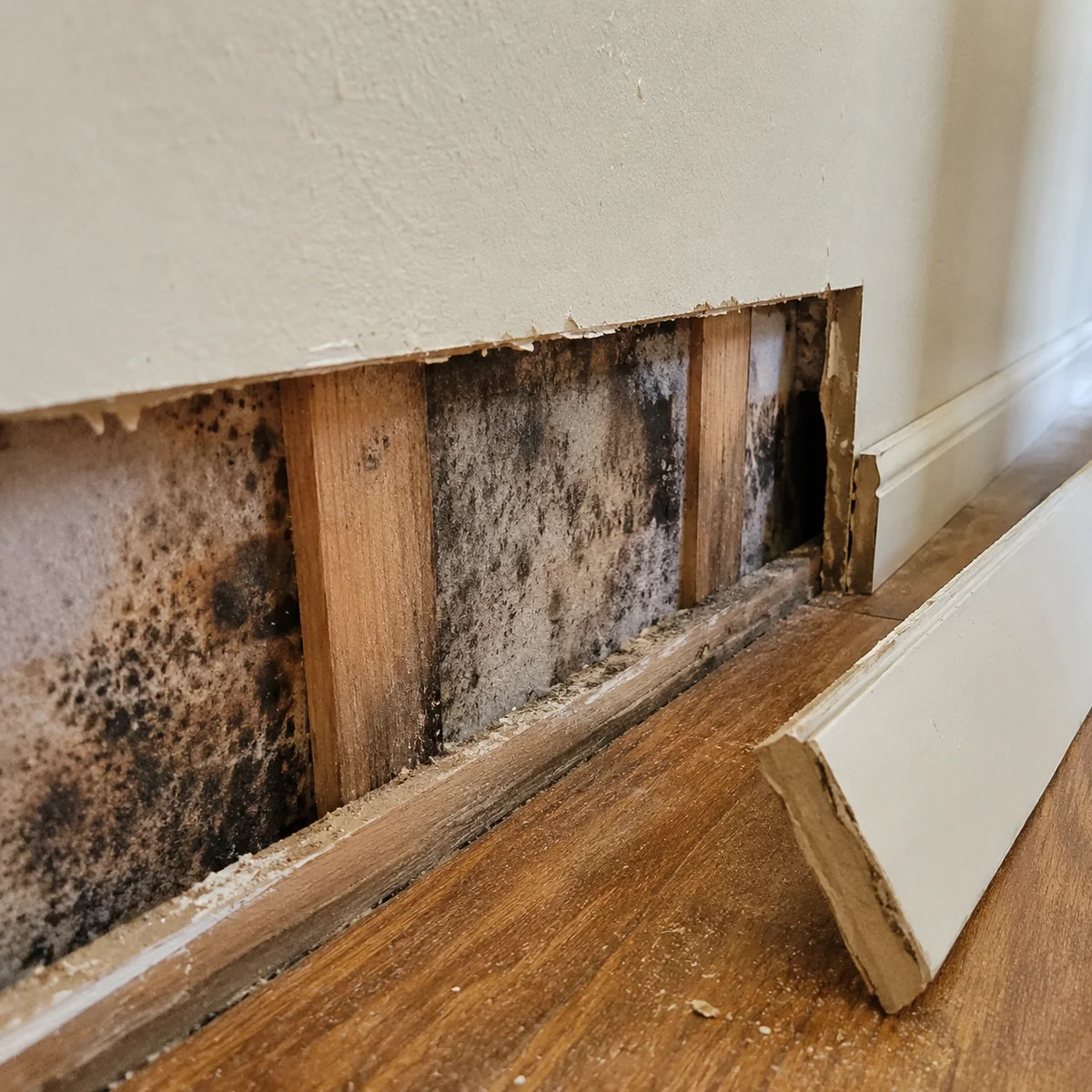
That is why the worst mold problems are usually the quiet ones. A shower wall you can see gets cleaned. The attic sheathing, the wall cavity behind the sofa, and the crawl space under the living room can stay damp for months before anyone notices, and a musty smell is often the first clue.
The pattern in every one of these eight spots is the same: mold needs sustained moisture, so the fix is almost never about the mold itself. Move the water out, whether with a fan, a dehumidifier, a downspout extension, or a repaired drip, and the surface generally stops being habitable.
Indicators, not an inspection
This map shows where mold typically appears, not where it is in your home. Hidden growth inside walls, ducts, and cavities takes a moisture meter or a trained eye to find. When something smells musty and you cannot see why, that is the moment for a professional look.
Want to check these spots in your own home?
Walk your own home with the audit checklist, room by room. And if you have already found something you do not like, a licensed local pro can trace where the moisture is coming from.