Tool
Indoor Humidity Mold Risk Checker
Grab the reading from any hygrometer, even a $10 one, and this tool tells you whether your indoor air is friendly to mold, plus the dew point where condensation starts.
Your readings
If you know the temperature of a cold spot, we can check it for condensation risk.
Your read
Enter your humidity and temperature, and this panel shows your risk level, your dew point, and what to do about it.
Mold does not need a leak to get started. Once indoor relative humidity sits above about 60 percent for long stretches, ordinary house dust and drywall paper hold enough moisture for growth to begin. The 30 to 50 percent range is the usual target because it is dry enough to discourage mold without making the air uncomfortable.
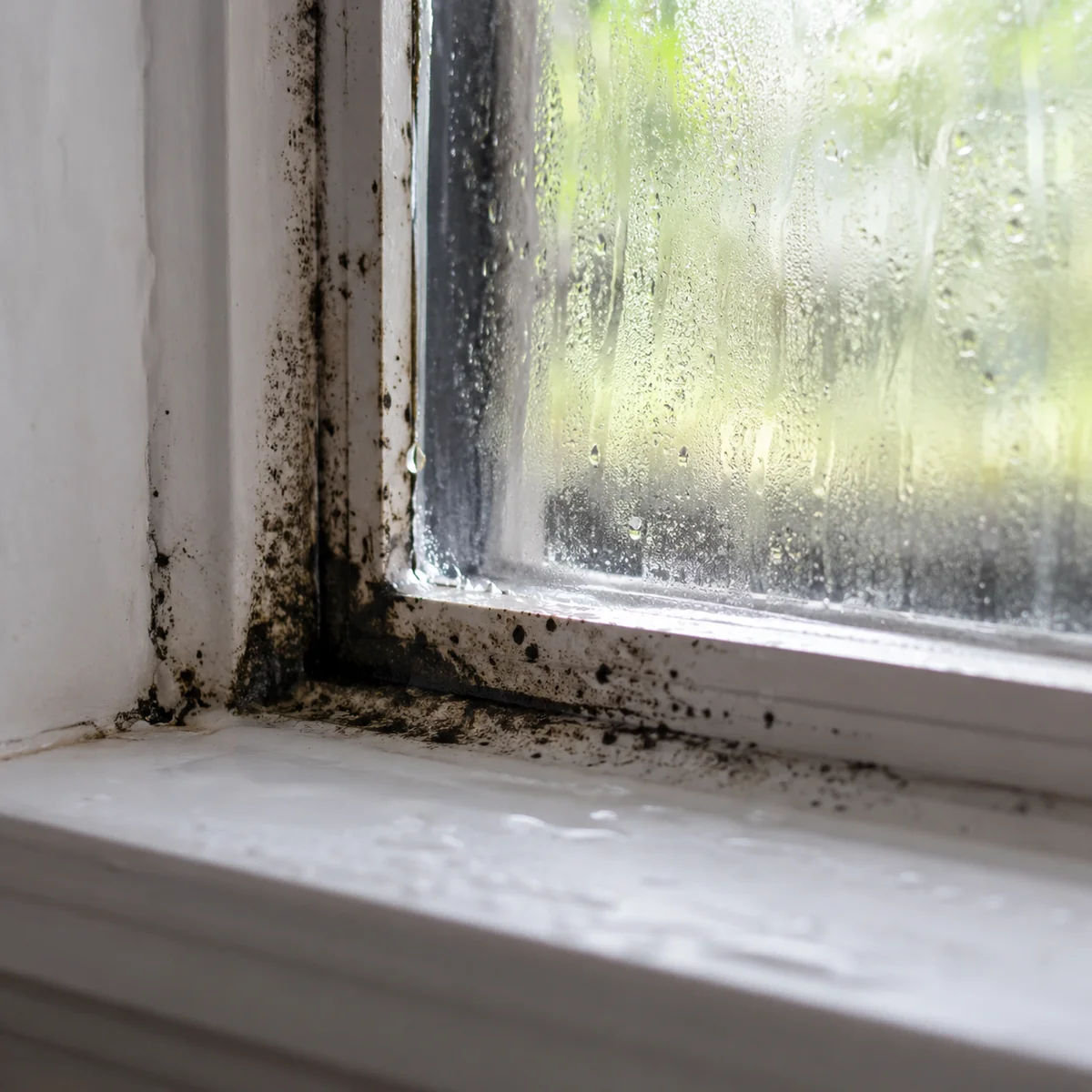
The dew point is the temperature where water vapor in your air turns back into liquid. Any surface colder than the dew point, a window frame in January, an AC duct in July, a basement wall most of the year, collects condensation. That thin film of water is how mold shows up in homes with no plumbing problem at all.
A common mistake is measuring humidity in one spot and assuming the whole house matches. Basements, bathrooms, and closets on exterior walls typically run wetter than the living room. Another is chasing a single reading, humidity swings with weather and cooking, so a few readings over a week tell you far more than one.
Guidance, not a diagnosis
This calculator reads the conditions you type in. It cannot see hidden moisture or existing growth. If you suspect a problem, an inspection by a licensed pro is the way to confirm what is actually happening.
Humidity staying high no matter what you try, or already seeing growth? A local pro can trace the moisture source.
Find a local mold pro